Vastu for the Puja Room: Direction, Placement & Tips
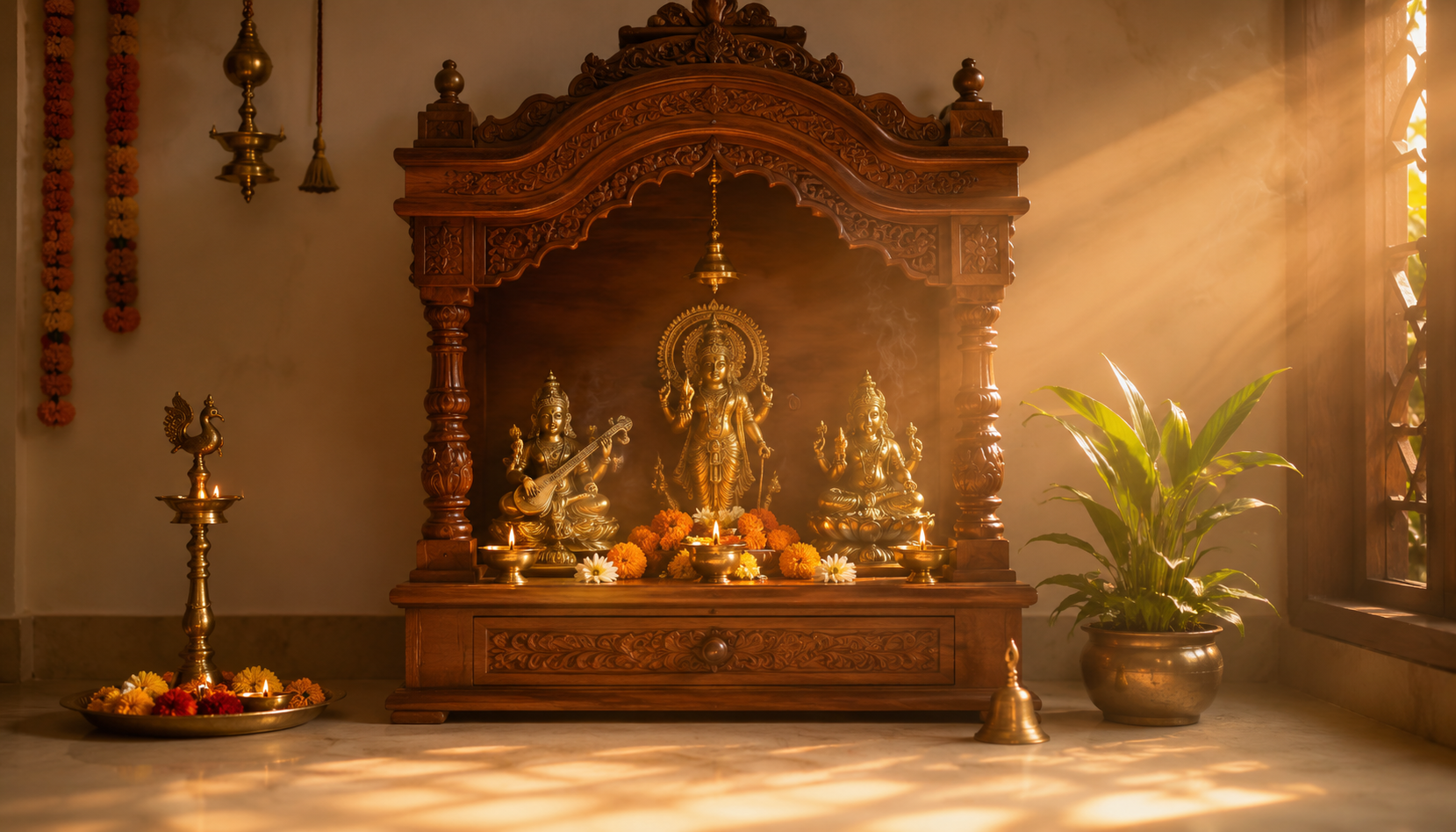
A home temple is the spiritual centre of the house, and Vastu Shastra gives it careful attention. The direction your puja room faces, where it sits, and how the idols are arranged all shape the flow of energy. This guide covers the practical Vastu rules for a puja room — simple to follow, whether you have a dedicated mandir room or a single sacred shelf.
Why does the puja room's direction matter in Vastu?
Vastu Shastra treats the home as a field of energy, with each direction governed by a deity and an element. The puja room is where you gather and concentrate that energy, so its placement sets the tone for the whole house. A well-placed mandir is believed to invite peace, clarity and prosperity; a poorly placed one — in a cramped, dark or impure corner — cannot do its work. The rules are less about superstition and more about creating a calm, clean, uplifting space.
Which direction should a puja room face?
The north-east (Ishan corner) is the most auspicious location for a home temple — it is associated with Lord Shiva and the flow of positive energy and morning light. Place the mandir so that you face east or north while praying. East welcomes the rising sun; north is linked to prosperity. Avoid the south as the primary praying direction. If a dedicated room isn't possible, the north-east corner of the living room or a clean spot away from the kitchen works well.
Where in the home should the mandir be?
The ideal is a separate, well-ventilated room or a quiet north-east corner on the ground floor. Keep it away from bathrooms, below or above toilets, and from under staircases — these are considered impure or heavy. The idols should sit at chest height or above, never directly on the floor, and a few inches away from the wall so air can move behind them. A small threshold or raised platform helps mark the space as sacred.
How should idols be arranged in the mandir?
Keep idols facing west or south so that you, the devotee, face east or north. Leave a little space between deities rather than crowding them, and avoid keeping more than one idol of the same deity in some traditions. Broken or chipped idols, and photos of the deceased, should not share the puja space. Keep the diya and lamp in the south-east of the mandir, the element of Agni (fire).
What should you avoid in a puja room?
- Placing the mandir in a bedroom (if unavoidable, screen it with a curtain and keep feet away from it).
- Idols facing each other, or facing directly out of the main door.
- Storing clutter, money, or non-spiritual items inside the mandir.
- Keeping broken idols or dried, dead flowers.
- A dark, cramped, or unclean corner — light and air matter as much as direction.
What are simple tips for a small home?
Not every home has room for a separate mandir, and Vastu allows for that. Choose the cleanest, calmest north-east spot you can; a wall-mounted wooden temple or a dedicated shelf is enough. Keep it uncluttered, light a diya daily, and ensure nothing impure sits directly above or below it. Sincerity and cleanliness carry more weight than scale — a small, well-kept altar in the right corner serves beautifully.