The Hanuman Setu — Stands on the Banks of the Ganga in Rishikesh
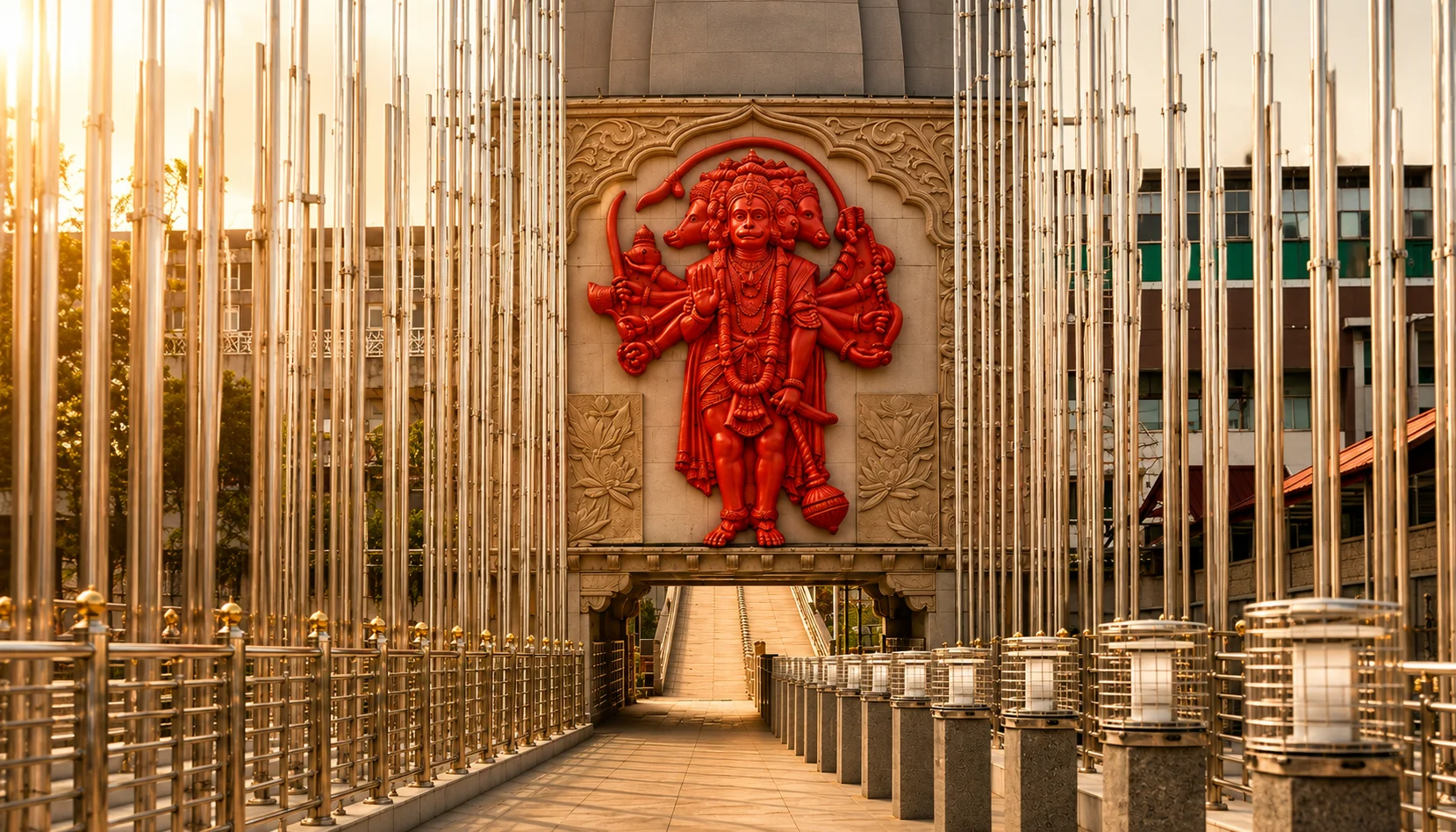
There Are Many Temples.
But There is Only One Hanuman Setu.
The bridge between bhakti and the divine. From the sacred banks of the Ganga in Rishikesh — to your home mandir.
What is Hanuman Setu?
Ask any traveller who has stood on the banks of the holy Ganga in Rishikesh at dusk — felt the cold mountain wind carry the echoes of bells and chanting — and they will tell you there is no place quite like it. It is here, on these sacred ghats, that the idea of HanumanSetu.com was born.
The word Setu means bridge. And Hanuman Setu is precisely that — a bridge. A bridge between the devotee and the divine. A bridge between ancient tradition and the modern world. A bridge between Sanatan Dharma's timeless iconography and the Indian home that seeks to honour it authentically.
But before it was a brand, Hanuman Setu was a place. The most sacred and storied bridge in all of Rishikesh. The bridge the world knew for decades as Ram Jhula and Laxman Jhula — and which has now been reborn as the Bajrang Setu, named in eternal honour of Bajrang Bali, our Lord Hanuman.
"Setu is not just a bridge of iron and rope. It is the bridge Lord Hanuman himself embodies — between the human and the divine, between devotion and power, between Bharat and its highest self."
— Brand Ethos, HanumanSetu.comRam Jhula. Laxman Jhula. Bajrang Setu. — One Sacred River. One Eternal Story.
Millions of pilgrims, seekers, and travellers know Rishikesh for its twin suspension bridges spanning the holy Ganga. Laxman Jhula, built in 1929 at 450 feet long, stands at the spot where mythology says Lord Lakshmana himself crossed the river on a jute rope. Ram Jhula, constructed in 1986, connects Sivananda Nagar with Swarg Ashram, 750 feet of iron span over the Ganga.
Together, they are not merely bridges. They are the very pulse of Rishikesh — gateways to ashrams, temples, yoga centres, and the spiritual hum that has drawn seekers to this land for thousands of years. Ram Jhula and Laxman Jhula are two of the most iconic suspension bridges in India, spanning the sacred Ganga and carrying not just footsteps but faith itself.
In 2019, Laxman Jhula was permanently closed due to structural safety concerns. In its place, the Uttarakhand Public Works Department began construction of the Bajrang Setu — a name charged with deep mythological significance. Bajrang Bali — another name for Lord Hanuman — the one who is as strong as a vajra (thunderbolt), the one who leaped across the ocean, the one whose very name is a bridge between fear and fearlessness.
The bridge being named after Hanuman is no coincidence. In the Ramayana, Lord Hanuman is himself the greatest setu — the one who bridged the impossible distance between Lord Rama and Mata Sita, between Lanka and Bharat, between despair and hope. That is why, when the founders of HanumanSetu.com stood on the banks of the Ganga in Rishikesh and felt the wind carry the name Bajrang Setu across the water, they knew — this was the name. This was the vision.
Many Places Called Hanuman Setu. One Brand That Carries the Name Forward.
Across the length and breadth of India, there are temples, ghats, and sacred sites that bear the name Hanuman Setu or celebrate the spirit of Hanuman as the eternal bridge. India's tradition of Hanuman worship is vast, with temples in every state — from the famous Hanumangarhi Temple in Ayodhya, Hanuman's symbolic home near the Ram Janmabhoomi, to the Sankat Mochan Hanuman Temple in Varanasi — believed to have been established by saint Goswami Tulsidas himself, who wrote the Ramcharitmanas.
Each of these temples is a setu — a bridge — between the bhakt and Bajrang Bali. HanumanSetu.com is built in that same spirit. Not a temple of stone and mortar, but a digital setu — a sacred bridge that carries the devotional arts of India directly to the hands of every devotee, wherever they may be.
The Boy from Lucknow Who Grew Up Holding Hanuman Ji's Hand
Before there was a brand. Before there was a website. Before there was even a name — there was a small boy in Lucknow, waking up before sunrise on a Tuesday morning, scrubbed clean, a fresh marigold garland clutched in both hands, being led by his family through the narrow, incense-filled lanes toward Hanuman Setu.
That is what the people of Lucknow call it. Hanuman Setu. The beloved temple — not a bridge of iron and rope, but a bridge of faith, built in the hearts of every family that has ever bowed before the Sankat Mochan — the remover of all sorrow, the one who dissolves every obstacle, the one who never turns away a devotee who comes with an open heart.
For the founder of HanumanSetu.com, those Tuesday mornings were not routine. They were everything. The world outside could be chaotic — school exams looming, childhood anxieties that felt enormous then — but the moment that boy stepped inside the temple, something settled. The weight lifted. The air smelled of jasmine and ghee diyas. The bells rang. And Hanuman Ji was simply there — enormous, saffron, powerful, and somehow, also very gentle. Like a friend who had been waiting.
He would watch the priest perform the aarti, eyes wide. He would press his forehead to the floor. He would sit for a long time in the courtyard, listening to the chanting that seemed to come from somewhere much deeper than the walls of the temple. And every single time — every single time — he would leave feeling like something had been repaired inside him. Some small brokenness, mended. The Sankat Mochan had done what his name promised.
"I didn't understand it as a child. I just knew that going to Hanuman Setu made everything feel right again. That is what Hanuman Ji has always been for me — not just the God of strength, but the one who makes you feel held."
— Founder, HanumanSetu.comYears passed. The boy grew. He left Lucknow. He built a career. He saw the world. But those Tuesday mornings never really left him. They lived somewhere in his chest — in the way he still instinctively folded his hands when he heard a temple bell, in the way he still felt something nameless and enormous whenever he stood before an idol of Hanuman Ji.
And when he stood one evening on the banks of the Ganga in Rishikesh, watching the new Bajrang Setu rise in the fading light, it all came together. Lucknow's Hanuman Setu. Rishikesh's Bajrang Setu. The Ganga. The bells. The boy. The devotion that had never really left.
HanumanSetu.com was born from that moment. From the memory of a child who found peace in a temple. From the conviction that every devotee deserves a bridge — between their longing and the divine. Between their home and the sacred. Between their bhakti and Bajrang Bali.
Jai Bajrang Bali. Sankat Mochan ki jai.
Everything a Devotee Needs. Crafted with Intention.
HanumanSetu.com is India's authentic D2C devotional brand, offering brass murtis, temple bells, pooja essentials, sacred jewellery, and devotional gifts — each sourced and crafted with spiritual intention and traditional artisanship. Every product on HanumanSetu.com is a bridge — between your faith and the divine.
Inspired by the legendary Hanumangarhi Temple of Ayodhya. The seated Hanuman — Veer mudra, gada in hand, the eternal sentinel of Ram Janmabhoomi.
The five-faced Hanuman — each face a divine aspect: Hanuman, Narasimha, Garuda, Varaha, Hayagriva. The most powerful protective form of the Lord.
Skanda — the divine commander. Kartikeya with vel (spear), peacock mount, revered across Tamil Nadu, Kerala, Andhra Pradesh, and Karnataka.
Pure brass temple bells — the Mahaveer Bell, combo bell sets. The sound of a bell is said to drive away negative energies and invoke the divine presence.
Everything needed for the daily mandir ritual — deepak, diya, incense holders, kumkum boxes, panchpatra, aarti thali, singhasan (murti seat), and more.
Wear your bhakti. Hanuman pendants, Bajrangbali lockets, Panchmukhi Hanuman necklaces, rudraksha malas, Ram Naam rings — crafted for the faithful.
Lord Rama, Mata Sita, Lakshmana, and Hanuman — the complete Ram Parivar set in fine brass casting. The eternal court of Ayodhya, for your home mandir.
Sacred gifting for Hanuman Jayanti, Ram Navami, housewarming (griha pravesh), weddings, and festivals — curated devotional gift sets.
Wooden and brass mandir furniture — singhasan (throne for murti), mandir backdrop panels, decorative torans, and home temple setups.
Hanuman Kavach pendants, brass Hanuman Yantra, Shri Yantra, Navgrah yantra — for protection, strength, and divine grace.
Every product on HanumanSetu.com is sourced from traditional artisan clusters — the brass craftsmen of Moradabad, the idol carvers of Jaipur, the bell-makers of Etah and Kanpur — ensuring that your purchase supports not just your bhakti but also India's living craft heritage.
Why HanumanSetu.com? The Four Pillars.
Authenticity
No plaster idols. No factory plastic. Every product is handcrafted brass, sourced directly from artisan communities with centuries of tradition.
Spiritual Intention
HanumanSetu.com is a brand rooted in Sanatan Dharma. We understand the difference between a decorative piece and a sacred one.
The Setu Promise
We are a bridge — between artisan and devotee, between ancient craft and modern delivery, between your bhakti and the divine.
Curated Range
From the Hanumangarhi murti to the Mahaveer bell, every product is chosen for its spiritual relevance, craft quality, and devotional resonance.
The Bridge, the Name, and the Brand
Why Rishikesh? Why This Bridge?
Rishikesh — the Yoga Capital of the World and the Gateway to the Garhwal Himalayas — has been a place of spiritual awakening for centuries. The Ganga descends here from the mountains into the plains, carrying with her the energy of Gangotri, Kedarnath, and Badrinath. At Rishikesh, she is still young, still fast, still cold — and utterly sacred.
It is at the crossing of this sacred Ganga that the Hanuman Setu (formerly Ram Jhula and Laxman Jhula, now Bajrang Setu) exists — and it is here that the very idea of HanumanSetu.com was conceived. The bridge connects not just two banks of a river. It connects the seeker to the shrine. The human to the divine. The devotee to Bajrang Bali.
Hanuman — The Original Setu
In the Valmiki Ramayana and Goswami Tulsidas's Ramcharitmanas, Lord Hanuman is described as the setu — the bridge — between Lord Rama and Mata Sita. It was Hanuman who crossed the ocean, found Sita in Lanka, gave her hope, and returned with news of salvation. Without Hanuman, there would have been no bridge between Rama and Sita. Without Hanuman, there would have been no victory over Ravana.
This is the deepest meaning embedded in the name Hanuman Setu. Not a bridge of iron and rope — but a bridge of faith, devotion, and unconditional service. HanumanSetu.com is built on this foundation.
For the Devotee Who Seeks the Authentic
Today's Indian devotee — whether in Delhi, Bengaluru, Chennai, Mumbai, or the diaspora in the UK, USA, or Singapore — seeks more than a product. They seek a connection. When they place a brass Hanuman murti in their home mandir, they are not buying a decorative piece. They are installing a presence. They are building their own personal setu.
HanumanSetu.com exists for this devotee. For the mother who wants a Hanumangarhi murti for her son before his board exams. For the professional who gifts a Panchmukhi Hanuman to a new business partner. For the family that wants a Ram Darbar set for their new home. For the Tamil devotee who seeks a brass Kartikeya Murugan murti that honours the southern tradition. For every bhakt who wants their faith honoured with quality, care, and devotion.
"Jai Bajrang Bali. May this bridge — of devotion, of craft, of service — carry your bhakti straight to the Lord's feet."
— HanumanSetu.comHanuman Setu vs. Other Devotional Platforms
The devotional products market in India is vast — and often unregulated. Mass-produced, low-quality idols flood marketplaces like Amazon and Flipkart, labelled "brass" but hollow inside. HanumanSetu.com is built on a different promise: every murti, every bell, every piece of pooja samagri is chosen by someone who understands what sacred means. Someone who has stood on the banks of the Ganga at Rishikesh and felt what it means to be in the presence of the divine.
When you buy from HanumanSetu.com, you are not just buying a product. You are crossing the bridge.
Devotee FAQs — HanumanSetu.com
Hanuman Setu refers to the sacred bridge crossing the Ganga in Rishikesh, formerly known as Ram Jhula and Laxman Jhula. The new bridge — Bajrang Setu — is named after Lord Hanuman (Bajrang Bali), honouring his divine role as the eternal bridge between devotion and the divine. The area around Ram Jhula and Laxman Jhula is one of the most spiritually significant landmarks in Rishikesh, surrounded by ashrams, temples, and the sacred Ganga.
HanumanSetu.com is India's authentic D2C devotional brand, offering premium brass murtis (Hanuman, Panchmukhi Hanuman, Kartikeya, Ram Darbar), temple bells, pooja essentials, devotional jewellery, and sacred gifts. The brand was inspired by the Hanuman Setu bridge in Rishikesh and built on the philosophy that every devotee deserves access to authentically crafted sacred products.
HanumanSetu.com carries brass Hanuman murtis (including Hanumangarhi swaroop and Panchmukhi Hanuman), Kartikeya/Murugan statues, Ram Darbar sets, the Mahaveer Bell and brass temple bells, pooja samagri, devotional jewellery (Hanuman pendants, Bajrangbali lockets, rudraksha malas), home mandir decor (singhasan, decorative torans), Hanuman Yantra and Kavach, and curated devotional gift sets for festivals and life occasions.
Yes. Ram Jhula (built 1986) and Laxman Jhula (built 1929) are the two iconic suspension bridges over the Ganga in Rishikesh. Laxman Jhula was closed in 2019 for safety reasons, and a new bridge — Bajrang Setu, named after Lord Hanuman — is being constructed in its place. Together, these bridges form the sacred "Hanuman Setu" of Rishikesh that inspired the HanumanSetu.com brand.
Yes. HanumanSetu.com sources handcrafted brass murtis from traditional artisan clusters in India, including the brass craftsmen of Moradabad and idol artisans of Jaipur and Kanpur. Each piece is chosen for its devotional authenticity, craft quality, and spiritual resonance — not mass-produced or machine-made.
India has hundreds of legendary Hanuman temples. The most revered include Hanumangarhi (Ayodhya), Sankat Mochan (Varanasi), Jakhoo Temple (Shimla), Panchmukhi Hanuman Mandir (Rameswaram), Salasar Balaji (Rajasthan), Sarangpur Hanuman Temple (Gujarat), Yantrodharaka Hanuman Temple (Hampi), and the Hanuman Temple at Connaught Place (Delhi). HanumanSetu.com honours all these forms of the Lord through its product range.
Cross the Bridge.
Bring the Divine Home.
Authentic brass murtis, temple bells, pooja essentials, and devotional jewellery — crafted with intention, delivered with care.
Visit HanumanSetu.com