Sundar Kand Path Vidhi: How to Read It at Home
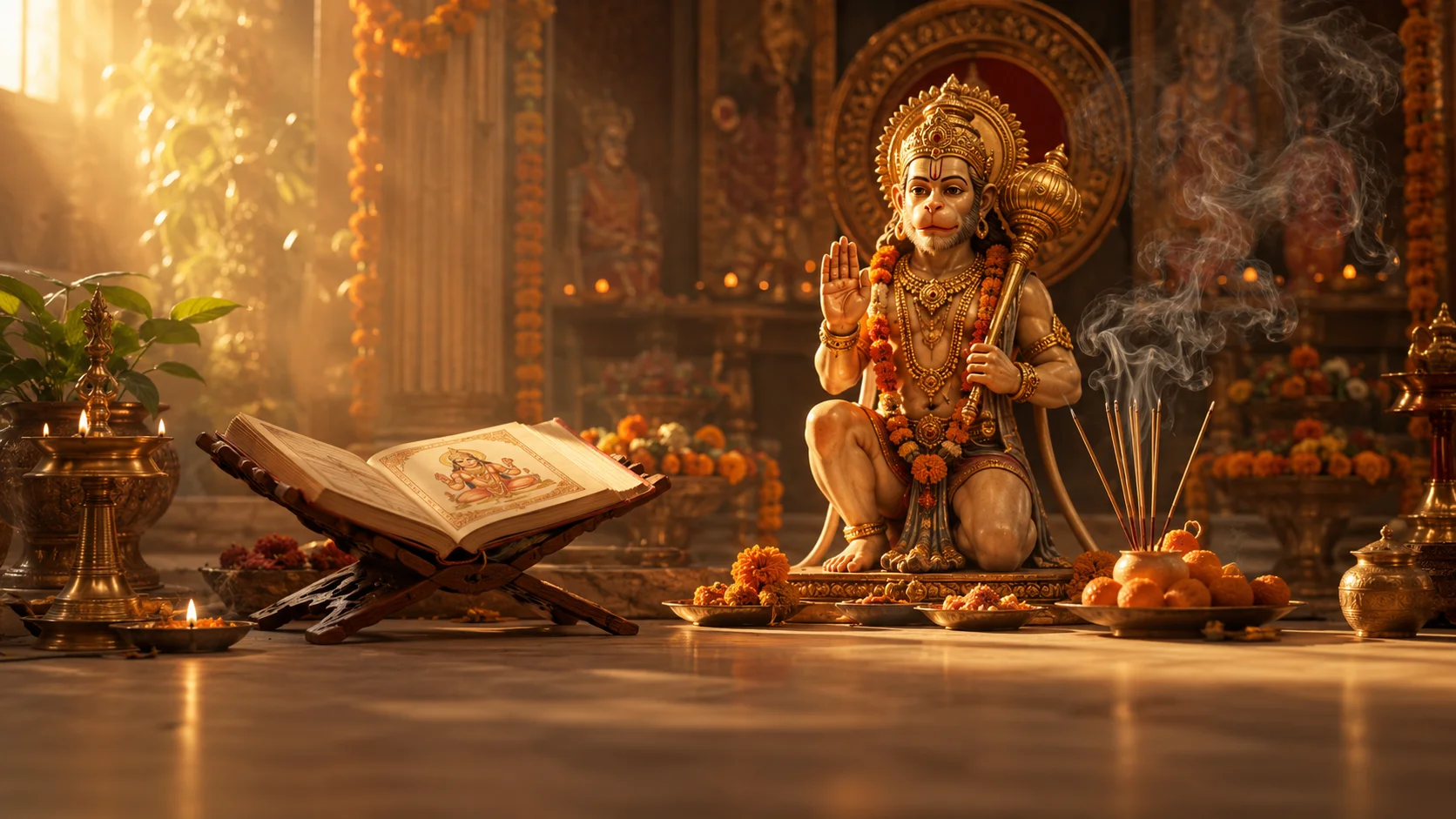
Sundar Kand is the chapter where Hanuman crosses the ocean alone. It is the most obstacle-removing text in the Vaishnava tradition. Here is how to read it correctly at home.
What is Sundar Kand?
Sundar Kand is the fifth chapter (kanda) of the Ramcharitmanas of Goswami Tulsidas, and its counterpart in the Valmiki Ramayan. The name means "beautiful chapter" — it takes its name from Sundar Van, the garden in Lanka where Hanuman found Mata Sita. This is the chapter where Hanuman acts alone: he crosses the ocean, locates Sita, consoles her, devastates Lanka, and returns to Shri Ram. It is a text about courage, devotion, and divine will moving through a single, extraordinary servant.
Why is Sundar Kand considered the most powerful path?
Of all the chapters in the Ramayan, Sundar Kand is considered the most auspicious to recite independently because it contains within itself a complete arc — departure, search, discovery, destruction of evil, and triumphant return. Devotees believe that sincere recitation removes the obstacles that block a person's life the way Hanuman removed every obstacle between himself and Sita. It is commonly performed in households facing a persistent difficulty: a stalled legal case, a blocked marriage, a health challenge that will not resolve.
What is the correct vidhi for Sundar Kand path?
Begin with a bath and clean clothes. Sit facing east or north on a clean aasan. Place a murti or image of Lord Hanuman — and ideally Shri Ram Darbar — on a clean raised surface. Light a sesame oil lamp and incense. Apply sindoor to the murti. Take a sankalp: state your name and your intention clearly in prayer. Begin with an invocation to Shri Ganesh, then Shri Ram, then Shri Hanuman. Read continuously, aloud if possible. When you finish, perform the aarti and offer prasad — boondi or laddoo is traditional.
When should you do the path, and can it be split across sittings?
Tuesday is the most auspicious day. Saturday is also strongly recommended, particularly for those dealing with Shani-related difficulties. The ideal is to complete the path in one sitting. If that is genuinely not possible, two sittings on the same day — morning and evening — is accepted. For a multi-day vrat (nine Tuesdays, for example), one portion per sitting is a well-established practice.
What should you avoid during the path?
- Leaving the recitation incomplete midway — if something must interrupt it, mark the page and resume as soon as possible.
- Non-vegetarian food or alcohol on the day of the path.
- A dirty or cluttered puja space.
- Treating it as a mechanical recitation rather than an act of devotion — the bhav (feeling) matters as much as the words.
Shop brass murtis, deepaks and pooja essentials at HanumanSetu.com →