Satyanarayan Katha: Story, Meaning & How to Perform It
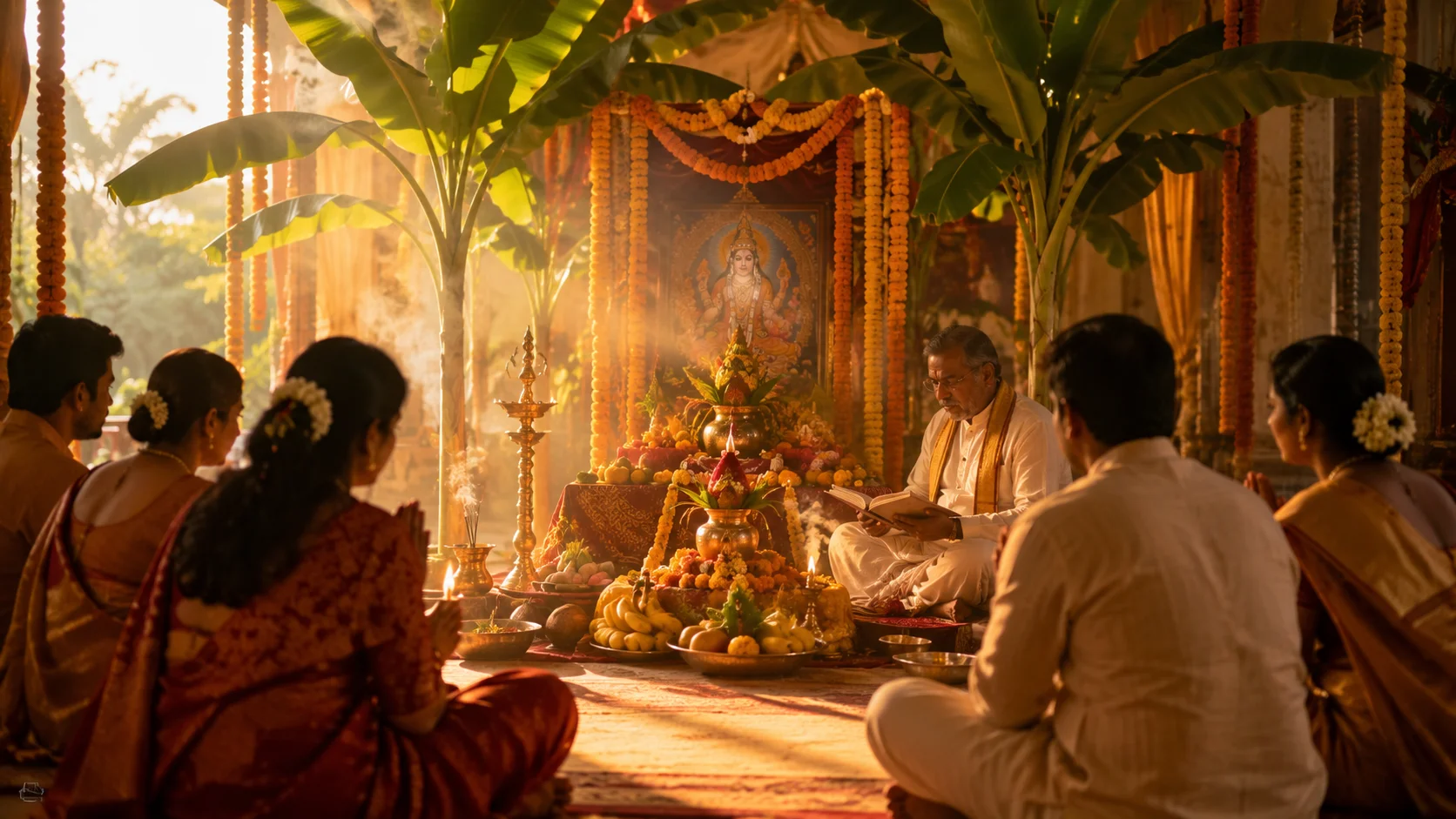
The Satyanarayan Katha is the puja Hindus perform at every milestone — a new home, a new child, a completed vow. Here is the complete story and how to do it at home.
What is the Satyanarayan Katha?
The Satyanarayan Katha is a vrat puja dedicated to Lord Vishnu in his form as Satyanarayan — the Lord of Truth. The text is found in the Skanda Purana and consists of five chapters, each narrating a story of devotees who performed this vrat. The puja is associated with gratitude: it is performed when a wish has been fulfilled, a milestone crossed, or a vow completed. In this way it differs from most pujas, which are petitionary. Satyanarayan puja is often the first act of a family settling into a new home, welcoming a child, or celebrating a marriage.
What do the five chapters of the Katha teach?
The first chapter establishes the vrat: Narada asks Lord Vishnu how humans can be freed from suffering, and the Lord reveals this puja as the answer. The second shows a poor Brahmin and a woodcutter receiving prosperity through sincere recitation. The third — the most instructive — tells of a merchant who took a vow in hardship, received his wish, then forgot to fulfil the vow. His family suffered until he remembered and performed the puja with a genuine heart. The fourth and fifth chapters repeat this pattern: disrespect of the prasad brings misfortune; sincere completion of the vow restores everything. The teaching throughout is consistent — make only the vows you will keep, and when you make them, keep them.
How do you perform Satyanarayan puja at home?
Begin with Ganesh puja — always. Then perform Kalash Sthapana, placing a filled copper pot with mango leaves and a coconut at the altar. The main puja follows in sixteen steps (shodashopchar), from invoking the deity to offering flowers, dhoop, deepak, and naivedya. The katha is then read aloud — all five chapters, without anyone leaving the room. After the katha, perform the aarti. The prasad — a sweet semolina preparation called panjiri, made with suji, sugar, banana, and milk — is offered to the Lord and then distributed. No one present should refuse it. Refusing the prasad is the central mistake all five chapters warn against.
Who can perform it, and when?
Any Hindu household can perform Satyanarayan puja. There is no requirement for a pandit if a family member can read the katha text. Purnima (full moon) is the most traditional day. Thursdays (Guruwar), Ekadashi, and any day of personal significance are all valid. The requirement is not a particular day but a sincere heart and the willingness to actually complete the puja once started.
Shop brass murtis, deepaks and pooja essentials at HanumanSetu.com →