Rudraksha Mala in Silver or Gold: Which Capping Is Right for You?
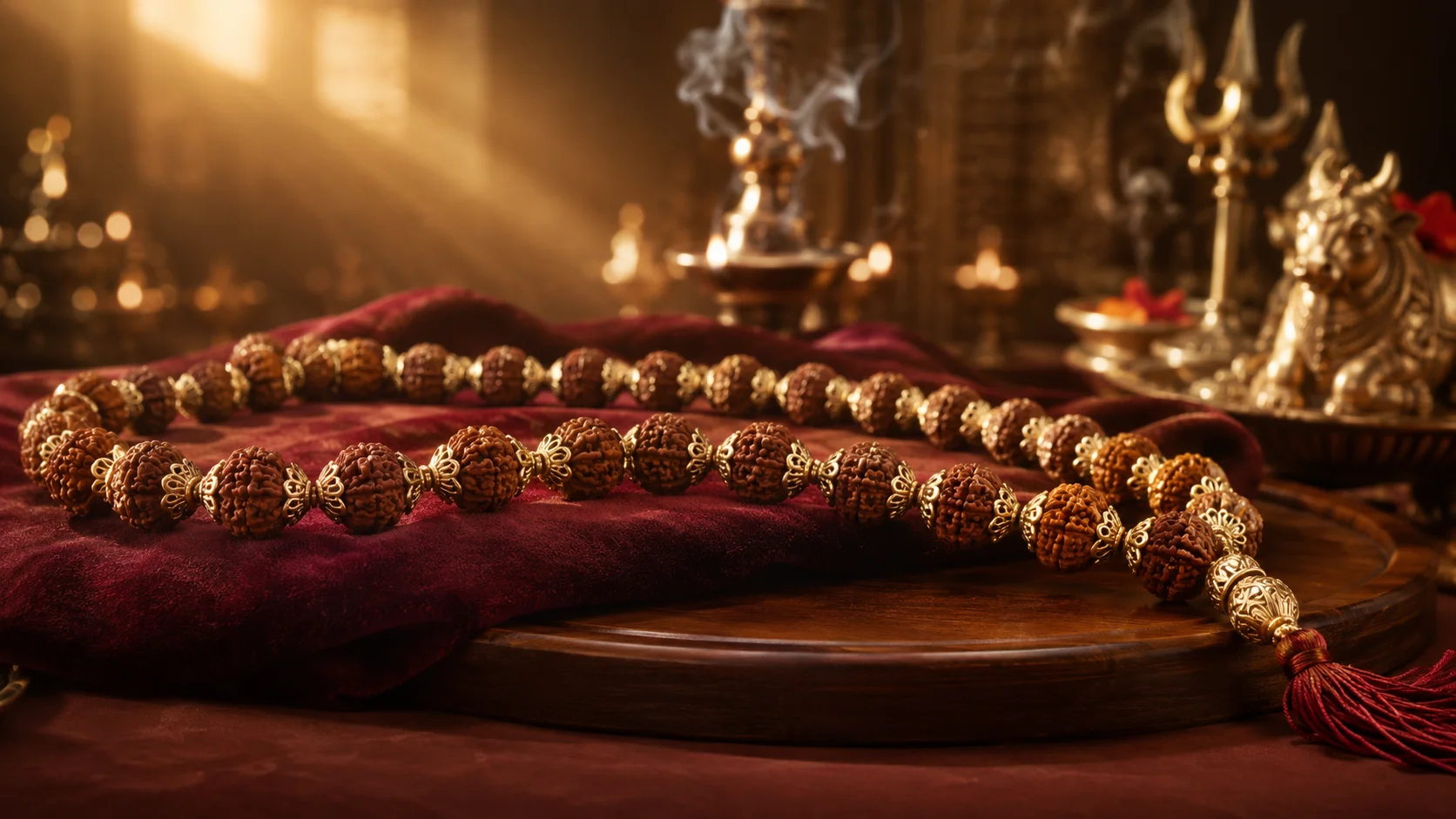
A rudraksha bead is already sacred. Adding silver or gold capping around it changes the energy it carries — here is what each metal means, what it does, and how to choose.
What does capping a rudraksha mala mean?
Capping refers to the small metal end-pieces fitted over the top and bottom holes of each rudraksha bead before stringing. These caps serve two purposes: they protect the natural holes from wearing out over years of use, and — according to the tradition — they transmit the properties of the metal into the bead, combining the spiritual energy of the rudraksha with the energetic qualities that the metal carries in Vedic and Ayurvedic thought. A capped mala is structurally more durable than a cotton-strung mala and visually more distinguished, which is why it is the standard form for malas worn as both a spiritual tool and a devotional ornament.
What does the tradition say about metals with rudraksha?
The Shiva Purana and the Padma Purana both reference wearing rudraksha threaded with gold or silver as the highest form of the practice. The Devi Bhagavatam specifically states that rudraksha strung in gold or silver and worn on the body grants the full benefit of the bead without interruption. From an Ayurvedic standpoint, gold is considered heating, solar, and activating — connected to vitality, confidence, and outward strength. Silver is cooling, lunar, and calming — connected to the mind, emotions, and receptive awareness. This basic distinction shapes how practitioners choose between the two for different intentions.
What does a gold-capped rudraksha mala carry?
Gold is linked to the Sun (Surya) in Vedic astrology and to the element of fire in Ayurveda. A rudraksha mala capped in gold combines the grounding, protective energy of the rudraksha with gold's solar qualities: strengthening willpower, supporting leadership and clarity of purpose, increasing vitality, and sharpening focus. This combination is traditionally favoured by those seeking to build confidence, overcome chronic fatigue, or strengthen their practice of active devotion — kirtan, seva, and daily puja performed with physical energy. Gold-capped rudraksha is also associated with Surya worship and is considered particularly auspicious for those with a weakened Sun in their birth chart.
From a practical standpoint, gold-capped malas are heavier and warmer to the touch than silver-capped ones, and they take on a particular lustre over years of wear that many devotees describe as deepening rather than diminishing with time.
What does a silver-capped rudraksha mala carry?
Silver is linked to the Moon (Chandra) in Vedic astrology and to the water element and lunar energy in Ayurveda. A rudraksha mala capped in silver combines the protective, focusing energy of the rudraksha with silver's cooling, calming qualities: settling the emotions, supporting deep meditation, reducing anxiety, and enhancing intuition and inner awareness. This combination is traditionally favoured by those whose practice is primarily contemplative — extended japa, pranayama, and seated meditation — and by those dealing with stress, restlessness, or sleep disturbance. Silver-capped rudraksha is considered especially supportive for those with a weakened or troubled Moon in their horoscope.
Silver is also the more common choice in domestic worship — it is the metal associated with the home, the family, and the protection of the household, which is why silver pooja thalis, kalash, and idol ornamentation are the norm in most traditional Hindu homes. A silver-capped rudraksha mala worn during home puja is consistent with this tradition.
Can the same mala be used for both japa and wearing?
Traditionally, the mala used for japa — the counting tool for mantra repetition — is kept separate from any mala worn as an ornament. The japa mala is treated as a concentrated spiritual tool, kept in a gomukhi (a cloth bag) when not in use and never shown to others or worn publicly, to preserve its focused energy. A separate mala — capped in silver or gold, often with the same mukhi — is worn around the neck or wrist as a devotional ornament and a continuous point of connection to the deity. If you intend to do both — wear a mala and use it for japa — using one mala for both purposes is entirely valid as long as the mala is treated with the same respect in both contexts.
How should you care for a capped rudraksha mala?
The metal caps are the most vulnerable part of a capped mala. Avoid exposure to harsh soaps, chemical cleaning agents, swimming pools (chlorine corrodes metal caps over time), and perfume sprayed directly onto the mala. Clean the caps gently with a soft dry cloth. The rudraksha beads themselves benefit from occasional light application of sandalwood or coconut oil applied with a fingertip, which keeps the natural seed from drying and cracking over years of wear. Store the mala on your altar or in a clean cloth pouch — never on the floor or in a mixed pile with other objects — and energise it periodically by placing it before your deity and reciting Om Namah Shivaya 108 times with intention.
Shop genuine rudraksha malas, brass murtis and pooja essentials at HanumanSetu.com →