Rudraksha & Mala Buying Guide: Mukhi, Authenticity & Care
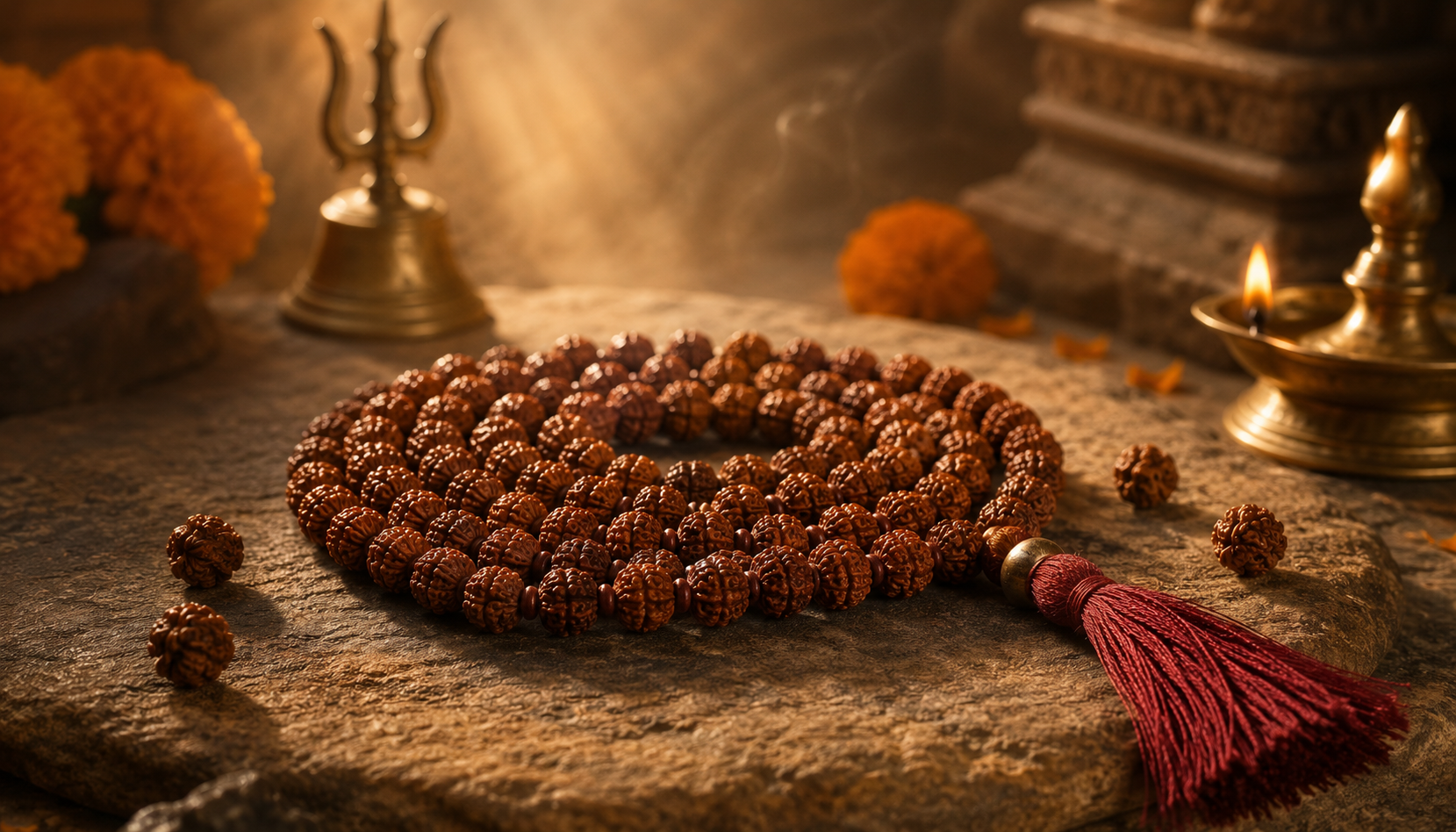
A mala is the companion of every sadhana — the strand that keeps count through 108 repetitions of your mantra. Choosing a genuine, well-made mala matters. Here is what to look for.
Understanding mukhi (faces)
Each rudraksha bead has natural lines called mukhi, or faces. A five-mukhi (panchmukhi) rudraksha is the most common and is suitable for almost everyone — it is the traditional choice for a japa mala. Other mukhi are associated with specific deities and intentions, but for daily practice, a clean five-mukhi strand is ideal.
Spotting a genuine bead
- Natural rudraksha has clearly defined, irregular lines — not the perfect, machine-cut grooves of imitations.
- The surface has natural pores and a firm, woody feel.
- Real beads vary slightly in size and shape; a strand of perfectly identical beads is a warning sign.
Rudraksha, tulsi or crystal?
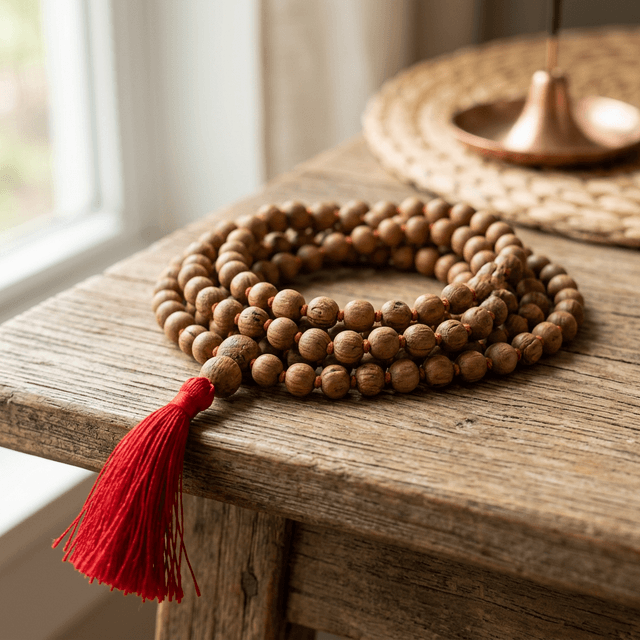
Rudraksha suits Shiva worship and general practice; tulsi malas are beloved for Vishnu and Krishna bhakti; crystal (sphatik) malas are chosen for calming, cooling energy. Pick the one that matches your ishta-devata and your practice.
Caring for your mala
Keep your mala clean and dry, store it on your altar or in a cloth pouch, and avoid wearing it in the bath. Treat it as a sacred tool, not jewellery, and it will serve your practice for years.
Browse our japa malas and prayer beads — strung for everyday use and energised with sacred mantras.