Ganesh Chaturthi at Home: Puja Vidhi & Eco Visarjan
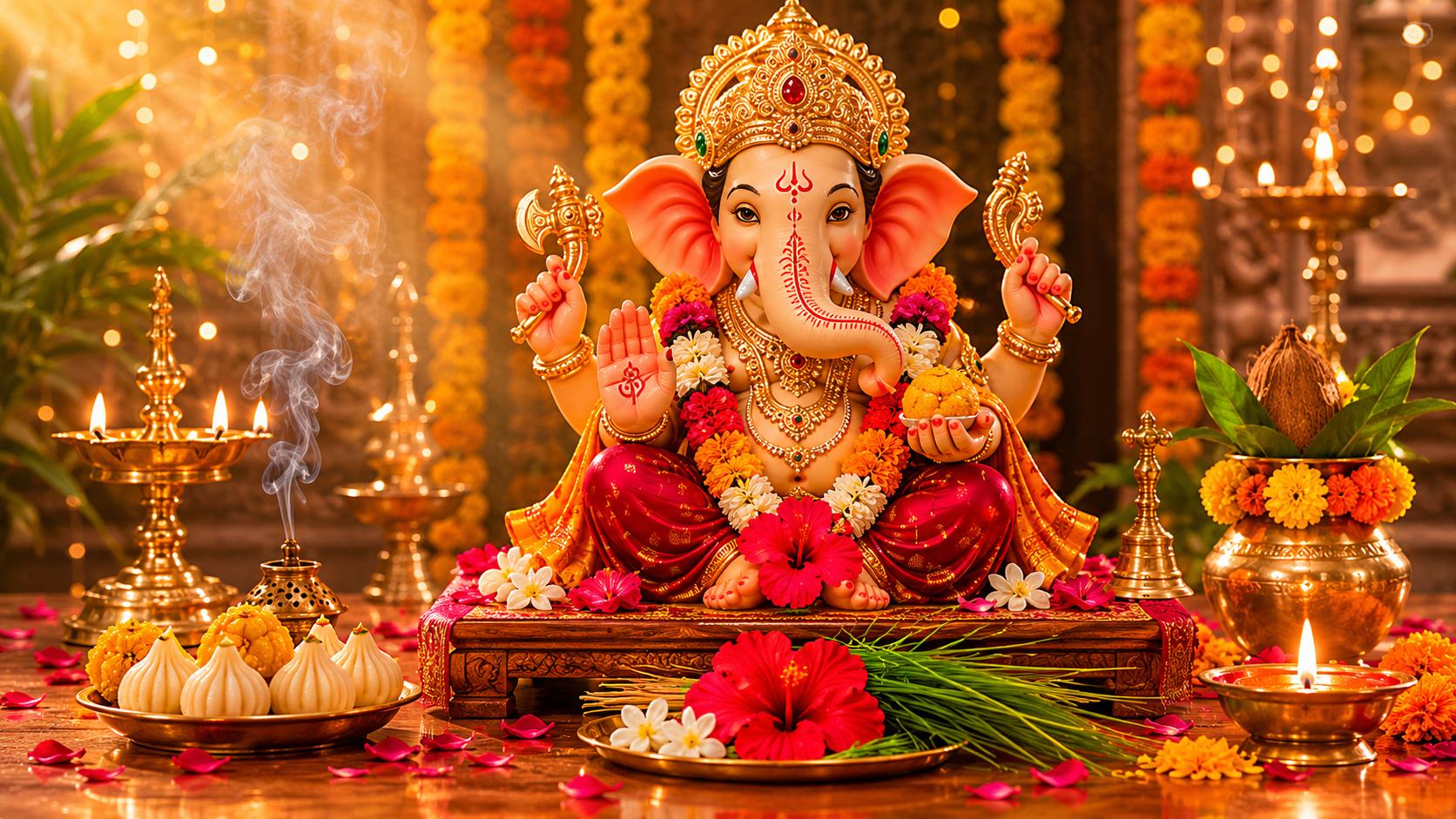
Ganesh Chaturthi welcomes Lord Ganesha — Vighnaharta, the remover of obstacles — into the home for a few joyful days. Celebrating it at home is simple and deeply rewarding: a clean space, a murti, daily offerings, and a respectful farewell. This guide covers the setup, the puja vidhi step by step, the bhog Ganesha loves, and how to perform an eco-friendly visarjan.
When is Ganesh Chaturthi?
Ganesh Chaturthi falls on the fourth day (Chaturthi) of the bright fortnight in the month of Bhadrapada, usually in late August or September. The festival runs for up to ten days, ending on Anant Chaturdashi with the visarjan (immersion). Households choose how long to keep Ganesha — commonly one and a half, three, five, seven or ten days — based on family tradition.
How do you set up for Ganesh Chaturthi at home?
Clean the space and prepare a raised platform (chowki) covered with a fresh red or yellow cloth in the north-east or east of the room. Place the Ganesha murti facing east or west so you face it from the opposite side. Keep your samagri ready: a diya, incense, durva grass (which Ganesha especially loves), red flowers and hibiscus, sindoor, akshat (rice), modak for bhog, and a kalash of water. Decorate simply with flowers and torans.
What is the puja vidhi step by step?
Begin with a sankalp — a quiet resolve stating your intention. Invoke Ganesha (pranapratishtha) and welcome him as an honoured guest. Offer water for the feet and hands, then bathe the murti symbolically, followed by sindoor, akshat, durva grass and flowers. Light the diya and incense, offer modak as bhog, and recite the Ganesha mantra "Om Gan Ganapataye Namah" or the Ganesha Atharvashirsha. Perform aarti morning and evening through the festival, and offer fresh bhog daily.
What bhog should you offer Ganesha?
Ganesha's most beloved offering is modak — steamed or fried dumplings filled with jaggery and coconut. Laddu (especially besan and motichoor), karanji, fresh fruit, and durva grass are also traditional. Offer the bhog with devotion each day and distribute it as prasad. Keep all offerings vegetarian and sattvic, and use fresh durva grass tied in small bundles, which holds special significance in Ganapati worship.
How do you do an eco-friendly visarjan?
On the final day, perform a heartfelt aarti and ask Ganesha to return next year ("Ganpati Bappa Morya, pudhchya varshi lavkar ya"). For an eco-friendly visarjan, choose a clay (shadu mati) murti rather than plaster of Paris, and immerse it in a bucket or drum of water at home. The clay dissolves; use the nutrient-rich water for your plants. Avoid chemical paints and non-biodegradable decorations so the farewell honours both Ganesha and the earth.