Hanuman Chalisa: Meaning, Benefits & How to Recite
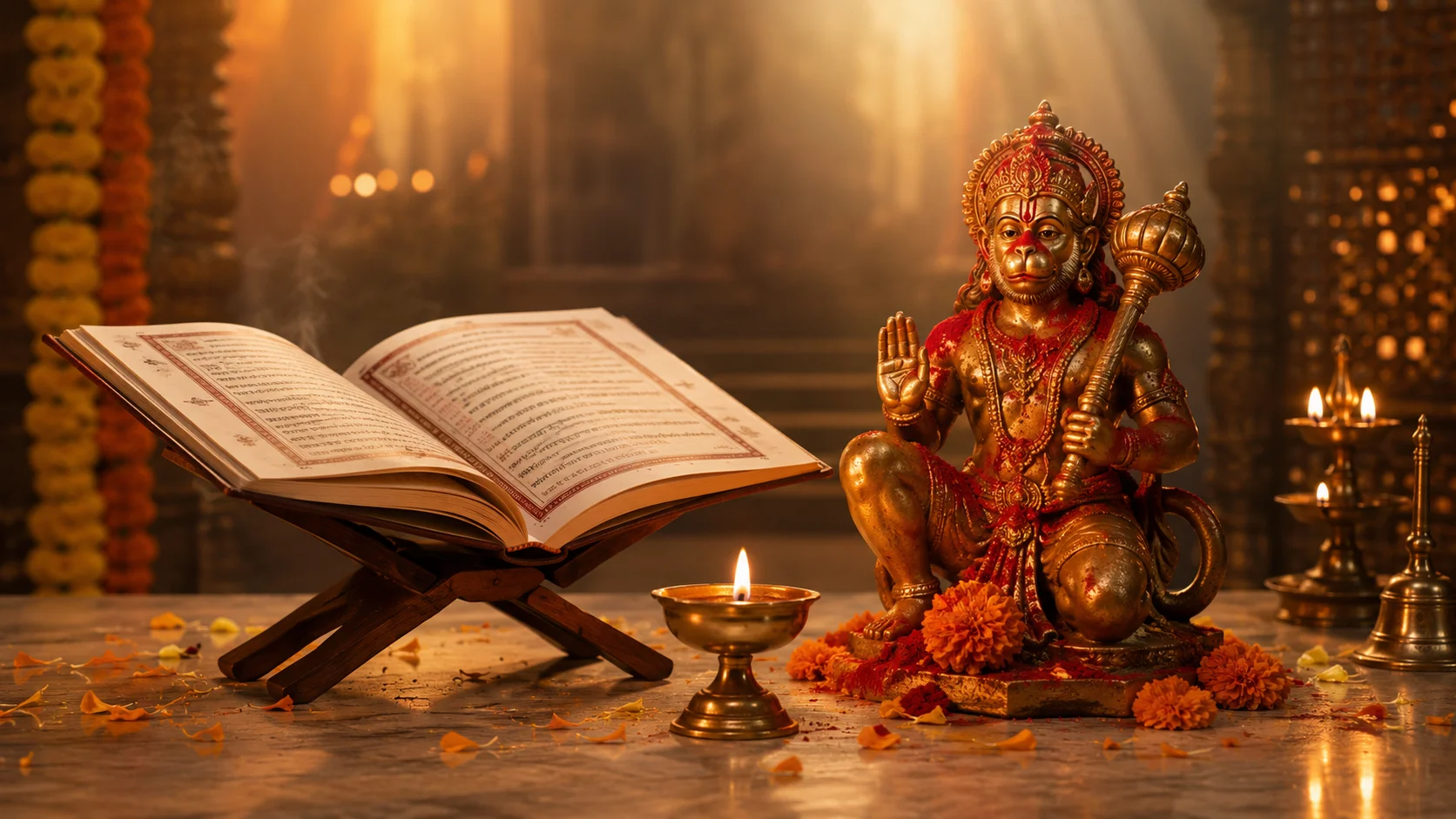
The Hanuman Chalisa is one of the most loved prayers in Hindu devotion — forty verses that carry centuries of faith in Bajrangbali's strength and protection. Whether you recite it once each morning or eleven times on a Tuesday, this guide explains what the Chalisa means, the benefits devotees experience, and exactly how to recite it at home.
What is the Hanuman Chalisa?
The Hanuman Chalisa is a devotional hymn of forty verses (chaupais), framed by opening and closing dohas, composed by the saint-poet Tulsidas in the sixteenth century in the Awadhi language. "Chalisa" comes from chalis, meaning forty. Each verse praises Lord Hanuman — his unwavering devotion to Shri Ram, his courage, his wisdom, and his power to remove fear and obstacle. It is recited across India and the world, by children and elders alike, because its words are simple and its promise is direct: where Hanuman is remembered, fear cannot stay.
What are the benefits of reciting the Hanuman Chalisa?
Devotees turn to the Chalisa for courage in difficult times, relief from fear and anxiety, and protection from negative influences. The verses themselves promise that sincere recitation drives away sorrow and grants strength of body and mind. Beyond the spiritual, the steady rhythm of the chaupais slows the breath and settles the mind — many people find a daily recitation becomes an anchor for the whole day. Tuesdays and Saturdays, traditionally linked to Hanuman, are considered especially powerful.
When and how should you recite it?
The most auspicious time is the Brahma muhurta — the quiet hours before sunrise — after a bath and in clean clothes. Sit facing east or north before your Hanuman murti or an image of Bajrangbali. Light a diya and an incense stick, fold your hands, and begin with the opening doha. Recite slowly and clearly; understanding the meaning matters more than speed. Evening recitation after sunset is equally valid for those who cannot rise early.
How many times should you recite the Hanuman Chalisa?
There is no single rule. One attentive recitation each day is enough to build a steady practice. On Tuesdays, many devotees recite it seven or eleven times. During a sankalp — a vow taken for a particular wish or period — some recite a fixed number daily for forty days. Begin with what you can sustain: consistency matters far more than count.
How should you set up your space for recitation?
A clean, simple space helps the mind settle. Place your Hanuman murti at chest height or above, never on the floor. Keep a diya, some incense, fresh flowers, and a little sindoor or chandan for tilak. Many devotees keep a pocket Chalisa book (gutka) or a japa mala nearby. The space need not be elaborate — a clean shelf, a lit diya, and a sincere heart are enough for Bajrangbali.
What common mistakes should you avoid?
- Rushing through the verses without attention — the Chalisa is a conversation with Hanuman, not a task to finish.
- Reciting in unclean clothes or an unclean space.
- Placing the murti or the Chalisa book directly on the floor.
- Breaking a sankalp midway without reason — take a vow only for what you can keep.
- Treating it as superstition rather than devotion; the power is in shraddha (faith), not mechanics.